OUR STORY

Eight Regions. One Thread of Heritage.

Every Shrivarya saree begins as a story — carried across centuries, looms, and hands, from the ghats of Banaras to the deserts of Rajasthan. This is where those stories are told.

Eight Regions. One Thread of Heritage.

Chapter 01 / 08Uttar Pradesh

The Story of Banaras

Katan Silk, Zari & the Ghats of the Ganges

The Story of Banaras

Short Story

Where the Ganges Whispers Stories in Silk

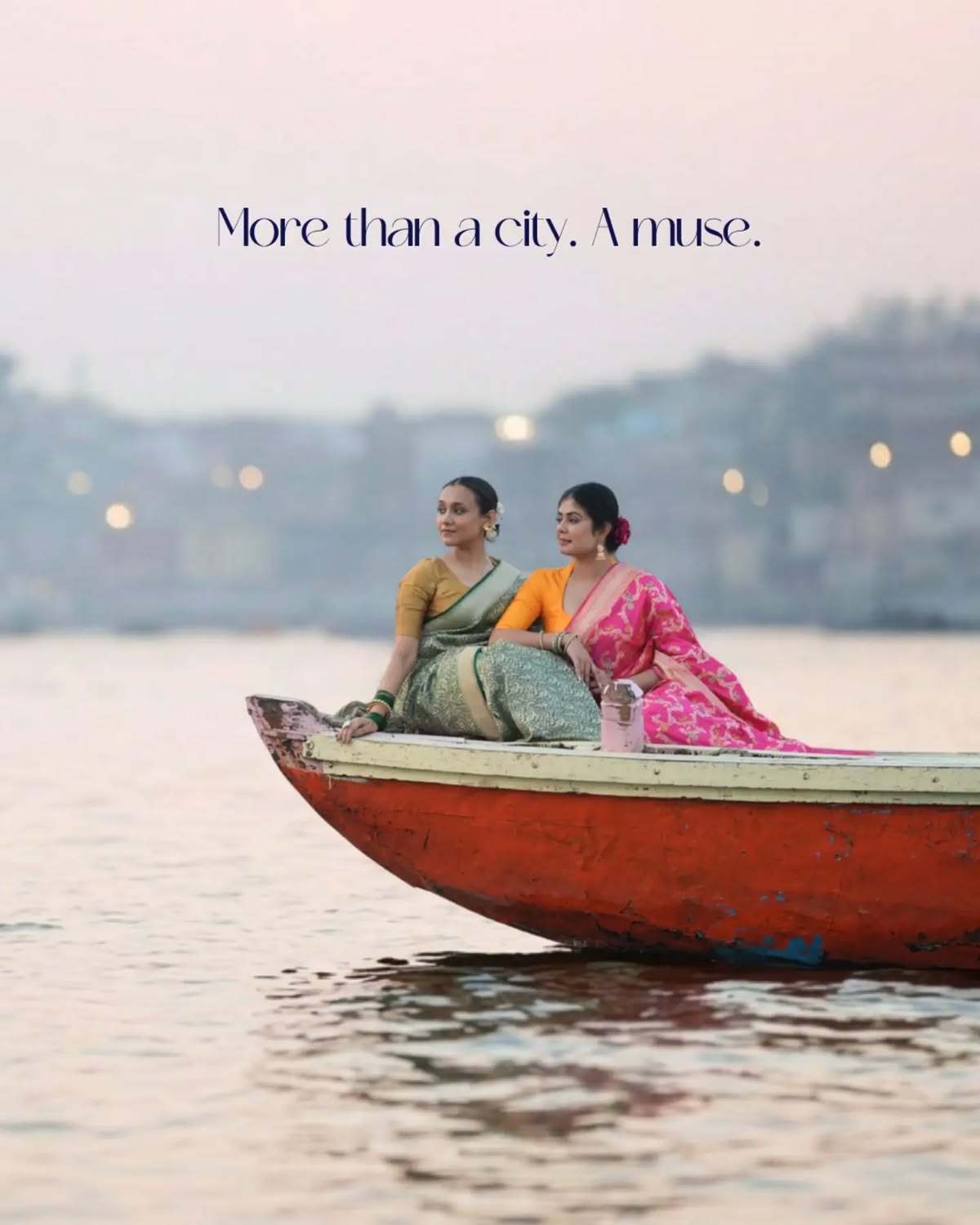
As dawn breaks over the sacred ghats of Banaras, the city awakens to centuries of tradition. The gentle flow of the Ganges, the echo of temple bells, and the rhythmic movement of handlooms have shaped one of India's most celebrated weaving legacies.

For generations, Banarasi sarees have been more than garments. They have been heirlooms passed from mother to daughter, witnesses to weddings, celebrations, and cherished family moments. Every motif tells a story inspired by Mughal artistry, temple architecture, flowering gardens, and royal courts that once adorned the fabric of Indian history.

Each Banarasi saree is a masterpiece patiently woven by skilled artisans, where thousands of delicate zari threads come together to create a drape worthy of timeless occasions. To wear Banarasi is to carry a piece of India's cultural heritage, woven with pride, devotion, and unparalleled craftsmanship.

Heritage

A Legacy Woven Through Centuries

Dating back to the Mughal era, Banarasi weaving flourished under royal patronage, blending Persian artistry with Indian craftsmanship. The result was a textile tradition renowned for intricate gold and silver zari work, elaborate brocades, and majestic motifs.

Today, the weaving communities of Varanasi continue this heritage, preserving techniques passed down through generations while creating sarees that remain symbols of grace and celebration.

Craftsmanship

The Art Behind Every Thread

  • Handwoven on traditional looms
  • Intricate gold and silver zari detailing
  • Inspired by Mughal gardens and royal architecture
  • Crafted by master artisans with generations of expertise
  • Designed to become treasured heirlooms

Signature Weaves

Discover the Many Faces of Banaras

Katan Silk

The most celebrated Banarasi weave, crafted from pure silk and known for its luxurious texture and timeless elegance.

Organza (Kora) Banarasi

Lightweight, graceful, and adorned with intricate zari work, perfect for contemporary sophistication.

Georgette Banarasi

Soft, flowing, and effortlessly elegant, ideal for celebrations and festive occasions.

Tissue Banarasi

A shimmering masterpiece woven with silk and zari, reflecting light with remarkable beauty.

Jangla Banarasi

Featuring elaborate floral and vine motifs inspired by royal gardens, prized for its rich craftsmanship.

Tanchoi Banarasi

Known for its intricate weaving patterns and detailed artistry, often created without zari for understated luxury.

Chapter 02 / 08Tamil Nadu

The Story of Kanchipuram

Temple Silk of the Thousand-Temple City

The Story of Kanchipuram

Short Story

Temple Silk of the Thousand-Temple City

In the ancient temple town of Kanchipuram, where towering gopurams touch the sky and centuries-old traditions continue to thrive, silk is not merely woven. It is revered.

For over a thousand years, Kanchipuram has stood as a sacred center of art, devotion, and craftsmanship. The rhythmic sound of handlooms echoes through its streets, where families of master weavers transform pure mulberry silk into magnificent drapes that embody grace, prosperity, and tradition.

Inspired by the architecture of South India's grand temples, Kanchipuram sarees are known for their striking borders, vibrant color contrasts, and intricate motifs drawn from mythology, nature, and sacred symbolism. Every saree is a celebration of artistry, carrying within its threads the blessings of tradition and the dedication of generations.

To wear a Kanchipuram saree is to embrace a legacy woven with devotion, craftsmanship, and timeless beauty.

Heritage

From Temple Town to Timeless Treasure

Kanchipuram, often celebrated as the "City of Thousand Temples," has been a renowned weaving center since the era of the Pallava and Chola dynasties. Patronized by kings, temple institutions, and noble families, the weavers of Kanchipuram perfected an art form that continues to symbolize prestige and elegance across India.

What sets Kanchipuram silk apart is its mastery of construction. The body, border, and pallu are traditionally woven separately and then interlocked by hand, creating a saree celebrated for both its beauty and durability.

Today, every authentic Kanchipuram saree remains a tribute to this enduring heritage.

Craftsmanship

Why Kanchipuram is Extraordinary

  • Woven from pure mulberry silk
  • Inspired by temple architecture and sacred motifs
  • Handcrafted by generations of master weavers
  • Renowned for bold contrast borders and vibrant colours
  • A treasured choice for weddings and milestone celebrations
  • Designed to be cherished and passed down through generations

Signature Weaves

Discover the Beauty of Temple Silk

Traditional Korvai Kanjivaram

The hallmark of Kanchipuram weaving, distinguished by contrasting borders artfully joined to the body through intricate craftsmanship.

Temple Border Silk

Inspired by temple gopurams, these sarees feature iconic triangular border patterns that reflect South India's sacred architecture.

Pure Zari Kanchipuram

Luxurious creations adorned with elaborate zari work, ideal for weddings and grand celebrations.

Checks & Stripes Kanjivaram

A sophisticated interpretation of heritage weaving featuring timeless geometric patterns.

Bridal Kanchipuram

Richly woven masterpieces crafted to mark life's most treasured moments.

Contemporary Kanchipuram

Modern palettes and lighter weaves designed for effortless elegance without losing traditional charm.

Chapter 03 / 08Madhya Pradesh

The Story of Maheshwar

A Queen's Legacy on the Banks of the Narmada

The Story of Maheshwar

Short Story

A Queen's Legacy on the Banks of the Narmada

Nestled along the serene banks of the sacred Narmada River lies Maheshwar, a city where history, devotion, and craftsmanship weave together in perfect harmony. The gentle rhythm of the river has inspired generations of artisans, whose looms continue to create some of India's most elegant and refined handwoven textiles.

The story of Maheshwari sarees is inseparable from the visionary queen Ahilyabai Holkar, who transformed Maheshwar into a flourishing center of art, culture, and weaving in the 18th century. Inviting master craftsmen from across India, she nurtured a weaving tradition that blended sophistication with simplicity.

Unlike heavier ceremonial silks, Maheshwari sarees are known for their graceful lightness, making them timeless companions for both everyday elegance and special occasions. Their delicate interplay of silk and cotton reflects the beauty of the Narmada itself, graceful, enduring, and quietly majestic.

Every Maheshwari saree carries the charm of royal heritage and the touch of skilled hands that continue to preserve this treasured tradition.

Heritage

From the Court of Ahilyabai Holkar to Modern India

More than two centuries ago, Ahilyabai Holkar envisioned Maheshwar as a center of excellence for handloom weaving. Under her patronage, artisans developed a unique textile tradition known for its lightweight construction, reversible borders, and understated elegance.

Inspired by the architecture of Maheshwar Fort and the flowing patterns of the Narmada, Maheshwari weaves became symbols of refined taste rather than opulence, celebrated for their versatility and sophistication.

Today, each authentic Maheshwari saree remains a tribute to that royal legacy.

Craftsmanship

Why Maheshwari is Timeless

  • Born under the patronage of Queen Ahilyabai Holkar
  • Handwoven using fine silk and cotton blends
  • Inspired by the flowing beauty of the Narmada River
  • Renowned for lightweight elegance and comfort
  • Borders inspired by Maheshwar Fort architecture
  • Perfect balance of tradition and contemporary grace

Signature Weaves

Discover the Elegance of Maheshwar

Pure Silk Maheshwari

Luxurious and lustrous, crafted for celebrations while retaining the hallmark lightness of Maheshwar.

Cotton Maheshwari

Comfortable, breathable, and ideal for effortless everyday sophistication.

Silk-Cotton Maheshwari

The most iconic Maheshwari weave, blending the richness of silk with the comfort of cotton.

Stripe & Check Maheshwari

Traditional patterns inspired by classic handloom aesthetics, offering timeless appeal.

Zari Border Maheshwari

Elegant sarees enriched with fine zari detailing that reflects understated luxury.

Contemporary Maheshwari

Modern colour palettes and minimalist motifs designed for today's woman while honouring heritage craftsmanship.

Chapter 04 / 08Madhya Pradesh

The Story of Chanderi

Woven from Sunlight, Light as a Whisper

The Story of Chanderi

Short Story

Woven from Sunlight, Light as a Whisper

Nestled amidst the historic forts, palaces, and ancient trade routes of Madhya Pradesh lies Chanderi, a town where weaving has been a way of life for centuries. Here, artistry is measured not by grandeur, but by delicacy. Every Chanderi saree embodies a rare beauty that feels almost weightless, as if woven from sunlight itself.

For generations, master weavers have crafted these ethereal drapes using fine silk and cotton yarns, creating fabrics so light and translucent that they were once favoured by royal families across India. The signature shimmer of a Chanderi saree comes from a meticulous weaving process that balances strength with grace, tradition with elegance.

Legend has it that the weavers of Chanderi sought to create a fabric as soft as a whisper and as luminous as moonlight. The result is a textile that drapes effortlessly, making every movement appear fluid and graceful.

Today, Chanderi remains a symbol of understated luxury, loved by women who appreciate elegance that speaks softly yet leaves a lasting impression.

Heritage

From Royal Patronage to Modern Elegance

The weaving heritage of Chanderi dates back several centuries and flourished under the patronage of various dynasties and noble courts. Strategically located on ancient trade routes, Chanderi became renowned for producing some of India's finest lightweight textiles.

The sarees were treasured by queens, aristocrats, and noble households for their sheer beauty, delicate texture, and subtle sheen. Over time, the craft evolved, blending traditional motifs with contemporary aesthetics while preserving the essence of handloom artistry.

Today, Chanderi weavers continue this legacy, creating textiles that are both timeless and relevant for the modern woman.

Craftsmanship

Why Chanderi is Extraordinary

  • Celebrated for its feather-light texture
  • Handwoven by skilled artisan families
  • Known for its natural luminous sheen
  • Inspired by the palaces and architecture of Chanderi
  • Delicate motifs inspired by nature and heritage
  • Perfect for effortless sophistication and timeless elegance

Signature Weaves

Discover the Beauty of Chanderi

Pure Silk Chanderi

Luxurious and elegant, offering a rich sheen while retaining the lightweight nature of Chanderi.

Silk-Cotton Chanderi

The most popular Chanderi weave, combining silk's elegance with cotton's comfort.

Cotton Chanderi

Breathable, graceful, and perfect for everyday sophistication.

Zari Chanderi

Enhanced with fine zari borders and motifs, creating a refined festive look.

Hand Block Printed Chanderi

Traditional Chanderi fabrics adorned with artisanal hand block prints for contemporary appeal.

Contemporary Chanderi

Modern interpretations featuring pastel palettes, minimal motifs, and effortless elegance.

Chapter 05 / 08Uttar Pradesh

The Story of Lucknow Chikankari

A Language of Thread, Patience & Nawabi Grace

The Story of Lucknow Chikankari

Short Story

A Language of Thread, Patience & Nawabi Grace

In the heart of Lucknow, a city celebrated for its refinement, culture, and timeless elegance, an exquisite art form has flourished for centuries. Chikankari is not merely embroidery. It is a language of craftsmanship, where every stitch tells a story of patience, beauty, and tradition.

Legend traces the origins of Chikankari to the Mughal era, when delicate white-on-white embroidery became a symbol of sophistication in the royal courts. Over time, this intricate needlework found its home in Lucknow, nurtured by skilled artisans who transformed simple fabrics into works of art.

Each motif is carefully embroidered by hand, creating floral vines, paisleys, and intricate patterns that appear almost weightless. Unlike ornate embellishments that command attention, Chikankari captivates through subtlety, offering an elegance that unfolds with every glance.

Today, Chikankari remains one of India's most treasured crafts, where heritage, grace, and artistry come together in every thread.

Heritage

From Royal Courts to Contemporary Wardrobes

Lucknow's Chikankari heritage dates back several centuries and flourished under the patronage of the Nawabs of Awadh. Renowned for their appreciation of art, architecture, and culture, the Nawabs elevated Chikankari into a celebrated form of textile craftsmanship.

What began as delicate white embroidery on muslin evolved into a rich tradition practiced across generations. Even today, every authentic Chikankari piece carries forward techniques perfected over centuries, preserving a legacy that continues to enchant women around the world.

Craftsmanship

Why Chikankari is Extraordinary

  • Entirely handcrafted by skilled artisans
  • Intricate floral and nature-inspired motifs
  • Inspired by the elegance of Mughal and Nawabi culture
  • Lightweight, breathable, and effortlessly graceful
  • Celebrated for subtle sophistication rather than opulence
  • Timeless craftsmanship that transcends trends

Signature Weaves

Discover the Craftsmanship of Lucknow

Classic White-on-White Chikankari

The most iconic expression of the craft, featuring delicate white embroidery on fine fabrics.

Mukaish Chikankari

Enhanced with subtle metallic embellishments that add a soft sparkle to traditional embroidery.

Georgette Chikankari

Fluid and graceful, ideal for festive occasions and elegant celebrations.

Cotton Chikankari

Lightweight, breathable, and perfect for everyday sophistication.

Silk Chikankari

A luxurious interpretation combining rich silk with intricate hand embroidery.

Contemporary Chikankari

Modern colours, innovative silhouettes, and traditional craftsmanship for today's woman.

Chapter 06 / 08West Bengal

The Story of Bengal

Jamdani, Tant & Threads that Carry Poetry

The Story of Bengal

Short Story

Jamdani, Tant & Threads that Carry Poetry

In the fertile plains of Bengal, where great rivers nourish the land and culture thrives in every corner, weaving is not merely a craft. It is a reflection of a civilization that has celebrated beauty, artistry, and intellect for centuries.

From the bustling ghats of Kolkata to the quiet weaving villages along the Ganges delta, Bengal's textile traditions have evolved through generations of skilled artisans. Here, every thread carries echoes of poetry, music, festivals, and stories that have shaped the cultural soul of the region.

Among Bengal's finest treasures are the iconic Jamdani and Tant sarees. Light, breathable, and exquisitely detailed, these weaves have long been cherished by women who appreciate elegance that feels effortless. Delicate floral motifs, geometric patterns, and nature-inspired designs emerge from painstaking handwoven artistry that often takes weeks to complete.

A Bengal saree is not simply worn. It becomes a part of life's celebrations, from Durga Puja festivities to family gatherings, carrying forward a timeless legacy of grace and refinement.

Heritage

From Ancient Looms to Cultural Icons

Bengal's weaving tradition dates back centuries and has been celebrated across India and beyond for its mastery of fine cotton textiles. The legendary muslins of Bengal were once so delicate they were described as "woven air."

Over time, the art evolved into distinct weaving traditions such as Jamdani, renowned for its intricate supplementary motifs, and Tant, celebrated for its comfort and everyday elegance.

Today, Bengal's weaving communities continue to preserve these treasured techniques, creating textiles that seamlessly blend heritage, artistry, and modern sophistication.

Craftsmanship

Why Bengal Weaves are Extraordinary

  • Crafted in India's historic weaving heartland
  • Handwoven by generations of master artisans
  • Delicate motifs inspired by nature and culture
  • Lightweight, breathable, and effortless to drape
  • Celebrated for artistic expression and fine detail
  • Perfect balance of tradition and contemporary elegance

Signature Weaves

The Pride of Bengal

Jamdani

Often called the jewel of Bengal weaving, Jamdani sarees feature intricate handwoven motifs that appear to float across the fabric.

Tant

Crisp, breathable, and elegant, Tant sarees are beloved for their comfort and timeless appeal.

Baluchari

Narrative woven masterpieces showcasing mythological scenes, royal stories, and intricate artistic detailing.

Muslin Inspired Weaves

Exceptionally soft and lightweight fabrics inspired by Bengal's legendary textile heritage.

Contemporary Bengal Handloom

Modern designs and colour palettes rooted in traditional craftsmanship.

Chapter 07 / 08Gujarat

The Story of Gujarat

Patola, Bandhani & a Life Lived in Colour

The Story of Gujarat

Short Story

Patola, Bandhani & a Life Lived in Colour

Across the sunlit deserts, bustling bazaars, and vibrant villages of Gujarat, colour is more than an expression. It is a way of life. Every festival, every celebration, and every community tells its story through a rich tapestry of hues, patterns, and craftsmanship that has flourished for centuries.

From the royal courts of Patan to the artisan communities of Kutch and Jamnagar, Gujarat's textile traditions reflect an extraordinary spirit of creativity. Here, skilled artisans transform silk and cotton into masterpieces through painstaking techniques that cannot be replicated by machines.

Among Gujarat's most treasured legacies are Patola and Bandhani sarees. One is renowned as one of the world's most complex weaves, while the other transforms simple fabric into vibrant constellations of colour through delicate hand-tied artistry. Together, they represent a heritage where craftsmanship meets celebration, and every saree becomes a work of art.

A Gujarat saree is not merely worn. It is an expression of joy, culture, and timeless tradition passed down through generations.

Heritage

From Royal Patronage to Global Admiration

For centuries, Gujarat has served as one of India's most important centers of textile innovation and trade. Merchants carried its fabrics across continents, while royal families treasured its intricate creations.

The legendary Patola sarees of Patan were once reserved for royalty due to the extraordinary skill and time required to create them. Simultaneously, the vibrant Bandhani traditions flourished across Gujarat's communities, becoming an integral part of weddings, festivals, and cultural celebrations.

Even today, these weaving and dyeing traditions continue to be preserved by artisan families who have inherited their craft through generations.

Craftsmanship

Why Gujarat Weaves are Extraordinary

  • Renowned for vibrant colours and intricate patterns
  • Handcrafted by generations of skilled artisans
  • Home to the legendary Patola weave
  • Celebrated for traditional Bandhani tie-dye artistry
  • Rooted in centuries of textile heritage
  • Each piece represents weeks, sometimes months, of craftsmanship

Signature Weaves

The Pride of Gujarat

Patola

Among the world's finest and most intricate double ikat weaves, Patola sarees are masterpieces of precision, symmetry, and luxury.

Bandhani

Created through thousands of hand-tied knots, Bandhani sarees burst into vibrant patterns symbolizing joy, prosperity, and celebration.

Gharchola

Traditionally gifted during weddings, Gharchola sarees combine Bandhani artistry with rich zari grids and auspicious motifs.

Panetar

A beautiful bridal tradition featuring elegant red and white palettes that symbolize new beginnings and prosperity.

Ajrakh Inspired Weaves

Influenced by Gujarat's celebrated block-printing heritage and geometric artistry.

Contemporary Gujarat Handloom

Modern interpretations of traditional techniques designed for today's discerning woman.

Chapter 08 / 08Rajasthan

The Story of Rajasthan

Forts, Deserts & Colour that Tells Every Story

The Story of Rajasthan

Short Story

Forts, Deserts & Colour that Tells Every Story

In the land of magnificent forts, timeless palaces, and endless golden deserts, every colour tells a story. Rajasthan is a place where heritage is not preserved in museums alone. It is woven into fabrics, celebrated in festivals, and carried forward through generations of artisan families.

Against the backdrop of regal courts and desert landscapes, Rajasthan's textile traditions flourished under the patronage of Rajput rulers who admired artistry, craftsmanship, and grandeur. From vibrant Bandhani patterns and intricate Leheriya waves to mirror work, Gota Patti embellishments, and hand-embroidered masterpieces, each textile reflects the state's rich cultural identity.

The people of Rajasthan have long used brilliant colours to celebrate life amidst the desert's earthy hues. Crimson reds symbolized prosperity, saffron represented courage, and deep blues mirrored the skies above the Thar. Every saree became a canvas of culture, telling stories of celebrations, weddings, seasonal festivals, and royal traditions.

To wear a Rajasthani saree is to embrace a heritage shaped by artistry, courage, and timeless elegance.

Heritage

From Rajput Courts to Modern Elegance

For centuries, Rajasthan's royal kingdoms nurtured some of India's finest artisans. The courts of Jaipur, Jodhpur, Udaipur, and Bikaner became centers of textile innovation where weaving, dyeing, embroidery, and embellishment were elevated into celebrated art forms.

Traditional crafts such as Bandhani, Leheriya, Gota Patti, and Mirror Work continue to thrive today, preserving techniques that have been handed down through generations. Each piece reflects the spirit of Rajasthan, vibrant, majestic, and unmistakably unique.

Today, artisans continue to blend heritage techniques with contemporary aesthetics, ensuring Rajasthan's textile legacy remains timeless.

Craftsmanship

Why Rajasthan is Extraordinary

  • Inspired by centuries of royal heritage
  • Celebrated for vibrant colours and festive spirit
  • Handcrafted by skilled artisan communities
  • Renowned for Gota Patti, Bandhani, and Leheriya artistry
  • Influenced by Rajasthan's palaces and royal courts
  • A perfect blend of grandeur, tradition, and craftsmanship

Signature Weaves

The Pride of Rajasthan

Bandhani

Created through thousands of painstaking hand-tied knots, Bandhani sarees symbolize joy, celebration, and prosperity.

Leheriya

Inspired by desert winds and flowing water, Leheriya's wave-like patterns are among Rajasthan's most iconic textile traditions.

Gota Patti

A regal craft featuring intricate ribbon-like embellishments once favored by Rajput royalty.

Mirror Work Sarees

Reflecting the festive spirit of Rajasthan through handcrafted mirrors and embroidery.

Mothra Weaves

Distinctive crisscross tie-dye patterns that showcase exceptional dyeing artistry.

Contemporary Rajasthan Collections

Modern interpretations of traditional crafts designed for today's elegant woman.